-2026-04-30-03-46-52-1.avif)
Looking for a heart tracker in 2026?
This industry has exploded. Watches, rings, bands, and subscription monitors. Every brand says they're the best. Choosing the right one is harder than ever.
The right tracker can quietly save your life by catching changes before you feel them. The wrong one quietly drains your money and leaves you no safer than before.
Who am I: I'm in my late 40s with a family history of heart problems, doing what I wish someone had done for me — comparing these trackers honestly, on the things that matter for everyday users.
My testing process: Over nine months I rotated through all four trackers, six weeks each, on the same wrist. I checked readings against my home blood pressure monitor every morning, and tracked battery life, app quality, and what actually showed up in the data.
What was important to me: I asked five questions of every tracker before testing:
- Does it track the heart metrics that matter — not just heart rate?
- Is the data accurate enough to act on, and how often does it measure?
- Is it comfortable enough to wear all day, every day?
- Will the battery last through the overnight hours when most warning signs appear?
- Are there hidden costs, like subscriptions you can't escape?
Skip ahead to my top pick, or read on for the full breakdown of all four heart trackers I tested.
Voltra
Editor's Pick 2026-2026-04-18-09-19-24-1.avif)
The Voltra Band is my favourite. It's affordable, has no subscription, and lasts up to 30 days on one charge. It tracked the heart metrics I cared about consistently — day and night — without ever asking me for another penny.
What surprised me most was how quickly I stopped noticing it. No screen lighting up at 2am, no charging anxiety, no monthly fee reminder in my inbox. Just clean data in the app every morning.
What I loved
- No subscription — ever. You own your data from day one
- Up to 30-day battery; charged it twice in six weeks
- 24/7 continuous heart-rate and overnight tracking
- Screenless, lightweight — forgot I was wearing it
- A fraction of the price of every other tracker here
What could be better
- No on-wrist display — everything lives in the app
- No app store / third-party watch faces
- Lesser-known brand vs Apple or Oura
| Price | Under £40 — one-time |
| Subscription | None |
| Battery | Up to 30 days |
| Form factor | Screenless wristband |
| Best for | Everyday heart & sleep tracking without ongoing costs |
Free UK delivery · 30-day returns
Apple Watch Series 10
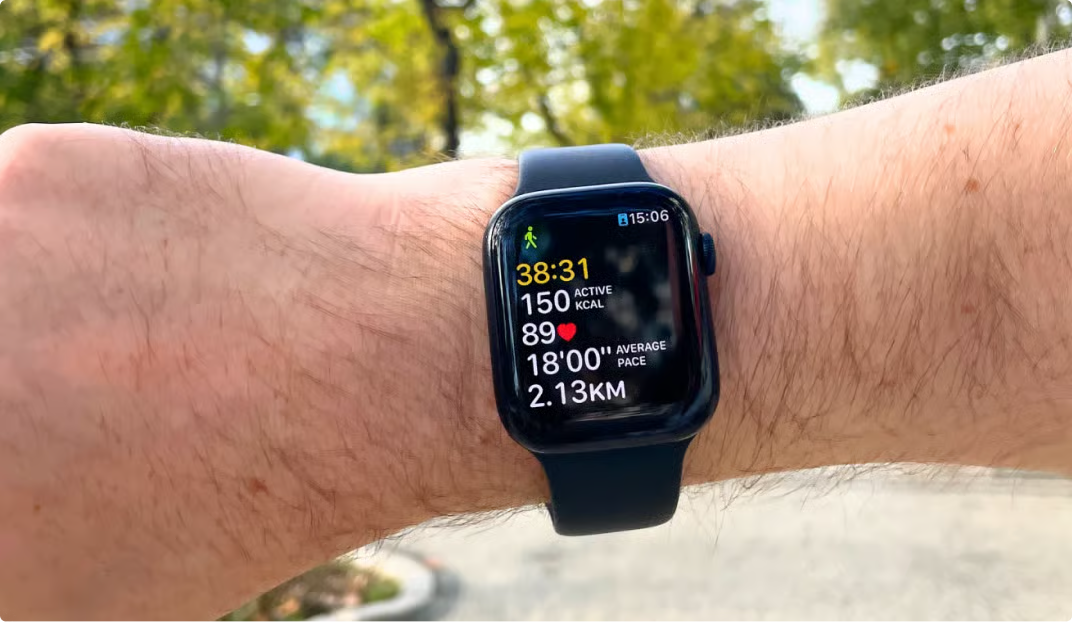
The most capable smartwatch on the market, full stop. ECG on demand, irregular rhythm notifications, and a brilliant display. But as a dedicated heart health tracker it has one fatal flaw: the battery. I had to charge it every single day, which means it spent many nights on a charger instead of on my wrist — exactly when overnight heart data matters most.
What I loved
- On-demand ECG and irregular rhythm alerts
- Beautiful display and best-in-class app ecosystem
- Excellent accuracy during workouts
What could be better
- Roughly daily charging — missed overnight data
- £399+ price tag
- iPhone only
| Price | From £399 |
| Subscription | None required (Fitness+ optional) |
| Battery | ~1–2 days |
| Best for | iPhone users who want a do-everything smartwatch |
Oura Ring Gen 4
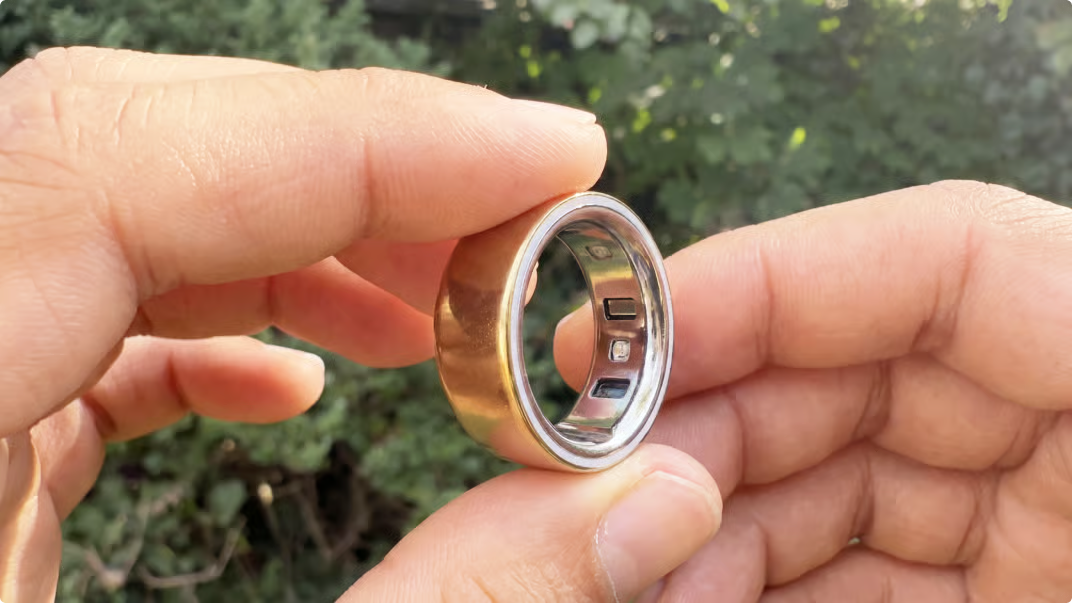
Beautifully made and the most discreet of the four. Sleep tracking is superb. But the full picture costs: the ring itself starts around £349, and the insights you actually want sit behind a monthly membership. Over a few years of ownership, the subscription quietly costs more than some of the hardware here.
What I loved
- Best-in-class sleep analysis
- Discreet — no screen, no buzzing
- Around a week of battery
What could be better
- Monthly membership needed for full insights
- £349+ upfront on top of the subscription
- Sizing kit adds friction to buying
| Price | From £349 |
| Subscription | ~£5.99/month for full features |
| Battery | Up to 8 days |
| Best for | Sleep-focused users who don't mind a membership |
WHOOP 5.0
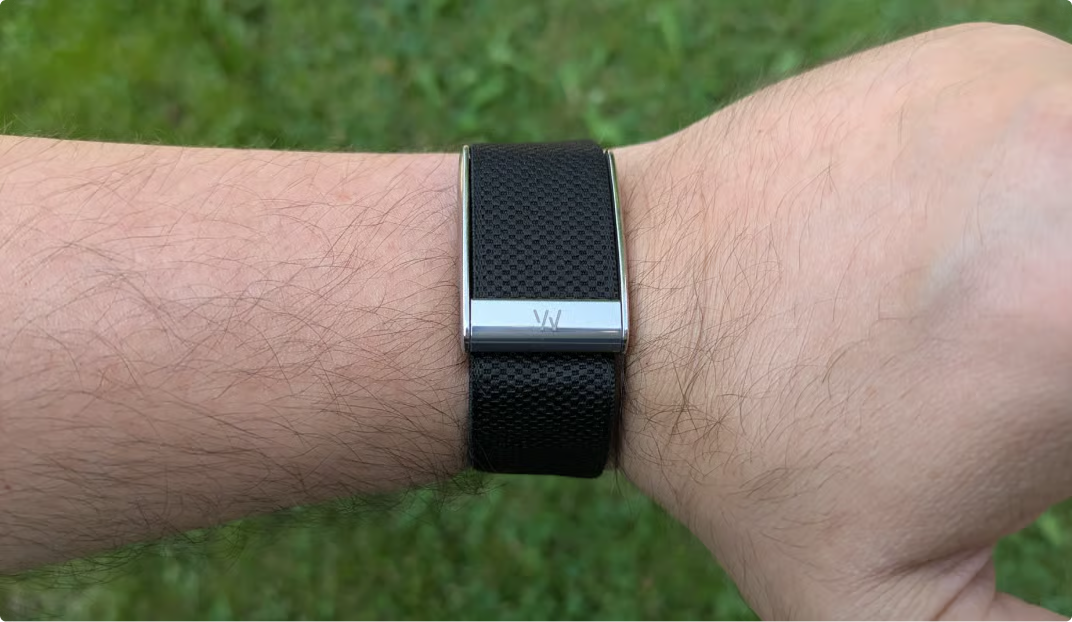
WHOOP is brilliant if you're an athlete chasing recovery scores and training strain. The data depth is genuinely impressive. But there's no way to own it outright — it's subscription-only, so the meter never stops running. For straightforward heart health monitoring, you're paying gym-membership money for features you may never use.
What I loved
- Deep recovery & strain analytics
- Comfortable, screenless design
- Hardware included with membership
What could be better
- Subscription-only — stops working if you cancel
- £150–£300+ per year, forever
- Overkill for non-athletes
| Price | Membership from ~£16/month |
| Subscription | Mandatory |
| Battery | ~14 days |
| Best for | Serious athletes optimising training load |
Final verdictThe one I kept wearing
After nine months, three of these trackers went back in a drawer. The Voltra Band is the one still on my wrist.
The Apple Watch is a better computer. The Oura is better jewellery. WHOOP is a better coach. But for the actual job — quietly watching your heart, every day and every night, without bleeding you with fees — the Voltra Band wins, and it isn't close.
At under £40 with no subscription, it's also the only one here you can buy without doing mental maths about the long-term cost.
Free UK delivery · 30-day returns · No subscription, ever